Tag: WIP 17

  • Adhesiolysis Studies

    Adhesiolysis Studies

    [vc_row css=”.vc_custom_1517939115140{padding-right: 20px !important;padding-left: 20px !important;background-color: #fbfbfb !important;}”][vc_column][vc_column_text]Published on August 23, 2019

    Dr. Ludger Gerdesmeyer gives a slide presentation discussing many different studies on lysis of adhesions. He explains how the different success rates are dependent on the quality of the study. He also discusses what impact placebos and patient’s expectation can have on statistical outcomes. He concludes by reviewing data from a large, randomized, double-blind, placebo-controlled trial on the lysis procedure for lumbar radiculopathy.

    [/vc_column_text][/vc_column][/vc_row]
  • Shortcomings of Epidural Steroids

    Shortcomings of Epidural Steroids

    [vc_row css=”.vc_custom_1517939115140{padding-right: 20px !important;padding-left: 20px !important;background-color: #fbfbfb !important;}”][vc_column][vc_column_text]Published on April 24, 2019

    Dr. Craig Hartrick discusses the many unanswered question regarding the use of steroids in pain management. The discrepancies in data include efficacy, risk vs. benefit, and patient selection. He explains the many complicated variables that can affect the anti-inflammatory properties of steroids at the cellular level. This includes the receptor-mediated, nuclear translocation process by the glucocorticoid and the subsequent transcription cascade of inflammatory mediators.

    [/vc_column_text][/vc_column][/vc_row][vc_row][vc_column][vc_column_text css=”.vc_custom_1488298613118{margin-top: -20px !important;}”]


    [/vc_column_text][/vc_column][/vc_row]
  • Interventional Pain As A Specialty In Today’s Society

    Interventional Pain As A Specialty In Today’s Society

    [vc_row css=”.vc_custom_1517939115140{padding-right: 20px !important;padding-left: 20px !important;background-color: #fbfbfb !important;}”][vc_column][vc_column_text]Published on February 1, 2019

    Dr. Ruiz Lopez speaks about the importance of Interventional Pain as a specialty in today’s society, especially with such an overuse of opioids. He explains why pain management has evolved into a specialty equal in importance as any other in medicine.

    [/vc_column_text][/vc_column][/vc_row]

  • Neuroplasty with Yong-Chul Kim

    Neuroplasty with Yong-Chul Kim

    [vc_row css=”.vc_custom_1517943737830{padding-right: 20px !important;padding-left: 20px !important;background-color: #fbfbfb !important;}”][vc_column width=”3/4″][vc_column_text]Published on January 3, 2018
    Dr. Yong-Chul Kim gives a detailed slide presentation on neuroplasty to show the evidence-based efficacy of the procedure. He discusses the outcomes of recent studies, some of which compare the use of different catheters and injectates. Dr. Kim also shows new evidence that hyaluronidase reduces inflammation and that hypertonic saline does reduce pain.[/vc_column_text][/vc_column][vc_column width=”1/4″][vc_column_text]

    [/vc_column_text][/vc_column][/vc_row]
  • Chemotherapy Induced Neuropathic Pain

    Chemotherapy Induced Neuropathic Pain

    [vc_row css=”.vc_custom_1517939115140{padding-right: 20px !important;padding-left: 20px !important;background-color: #fbfbfb !important;}”][vc_column][vc_column_text]Published on December 27, 2018

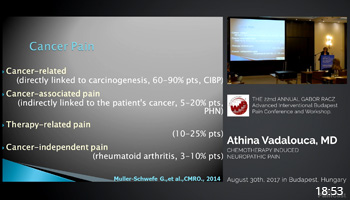
    Dr. Athina Vadalouca discusses the prevalence of Chemotherapy-Induced Peripheral Neuropathy. She reviews many studies to explain how chemotherapy effects the neurons with-in the DRG, and the effect this has on afferent signaling, from proprioception to chronic pain. She then discusses the many pharmacological treatments that have been published.

    [/vc_column_text][/vc_column][/vc_row][vc_row][vc_column][vc_column_text css=”.vc_custom_1488298613118{margin-top: -20px !important;}”]


    [/vc_column_text][/vc_column][/vc_row]
  • Role of the Dorsal Root Ganglion in Neuropathic Pain

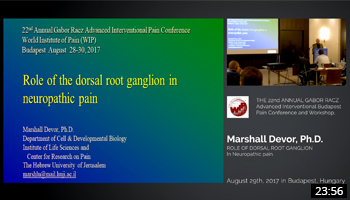
    Role of the Dorsal Root Ganglion in Neuropathic Pain

    [vc_row css=”.vc_custom_1517939115140{padding-right: 20px !important;padding-left: 20px !important;background-color: #fbfbfb !important;}”][vc_column][vc_column_text]Published on October 17, 2018

    Prof. Marshall Devor gives an informative lecture on the nature of neuropathic pain, and how it differs in both physiology and treatment from nociceptive pain. He presents compelling evidence that shows that neuropathic pain is mostly generated by the cells within the DRG and not from axonal injury. He discusses a surprising alternative to the widely accepted cause of radiculopathy (sciatica in this case) that physician encounter on a daily basis.

    [/vc_column_text][/vc_column][/vc_row]
  • Lumbar Sympathetic Phenol and Radiofrequency Neurolysis

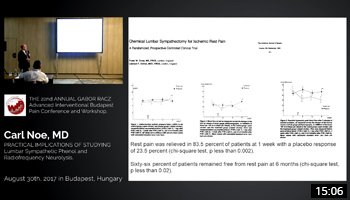
    Lumbar Sympathetic Phenol and Radiofrequency Neurolysis

    [vc_row css=”.vc_custom_1517939115140{padding-right: 20px !important;padding-left: 20px !important;background-color: #fbfbfb !important;}”][vc_column][vc_column_text]Published on September 14, 2018

    Dr. Carl Noe discusses lumbar sympathectomy to treat CRPS, mainly sympatholysis with phenol and radiofrequency. This includes proper needle placement for accurate neurolysis. He reviews several studies comparing the efficacy of these two procedures, including the risk of post sympathectomy neuralgia. He also reviews the Budapest Criteria as a guideline to properly diagnose CRPS.

    [/vc_column_text][/vc_column][/vc_row]

  • Evidence for Neuromodulation

    Evidence for Neuromodulation

    [vc_row css=”.vc_custom_1517939115140{padding-right: 20px !important;padding-left: 20px !important;background-color: #fbfbfb !important;}”][vc_column][vc_column_text]Published on August 9, 2018

    Dr. Robert Levy gives a detailed lecture on the history of neuromodulation, and by discussing several pivotal studies, he tracks the progression of this therapy. He reviews many current studies to explain how modern technology and new procedures have drastically improved the efficacy of SCS stimulation. These include DRG stimulation, burst stimulation, and high frequency (HF10).

    [/vc_column_text][/vc_column][/vc_row][vc_row][vc_column][vc_column_text css=”.vc_custom_1488298613118{margin-top: -20px !important;}”]


    [/vc_column_text][/vc_column][/vc_row]
  • The Role of Intrathecal Drug Delivery in Chronic Low Back Pain

    The Role of Intrathecal Drug Delivery in Chronic Low Back Pain

    [vc_row css=”.vc_custom_1517939115140{padding-right: 20px !important;padding-left: 20px !important;background-color: #fbfbfb !important;}”][vc_column][vc_column_text]Published on July 11, 2018

    Dr. Richard Rauck discusses the use of intrathecal (IT) pumps for drug delivery, including specific conditions for which it can be indicated. Using published studies, he shows how using IT delivery of opioids at small doses can reduce pain while reducing the dose of oral opioids. He also discusses study results of non-opioid IT medication.

    [/vc_column_text][/vc_column][/vc_row]
  • Challenges in the Management of Chronic Low Back Pain

    Challenges in the Management of Chronic Low Back Pain

    [vc_row css=”.vc_custom_1517939372672{padding-right: 20px !important;padding-left: 20px !important;background-color: #fbfbfb !important;}”][vc_column width=”3/4″][vc_column_text]Published on June 18, 2018
    Dr. Sudhir Diwan discusses the ongoing struggle in which physicians have in properly diagnosing low back pain. He goes over several statistics showing the true disconnect with diagnoses and true cause of low back pain. He explains the pathophysiology of degenerative disc disease (DDD) and related discogenic pain. He also discusses facet and SI pain and treatments.[/vc_column_text][/vc_column][vc_column width=”1/4″][vc_column_text]

    [/vc_column_text][/vc_column][/vc_row]